
auto strainer
What is an IWAKO Auto Strainer, and how does it differ from a manual strainer?
What is an IWAKO Auto Strainer, and How Does it Differ from a Manual Strainer?
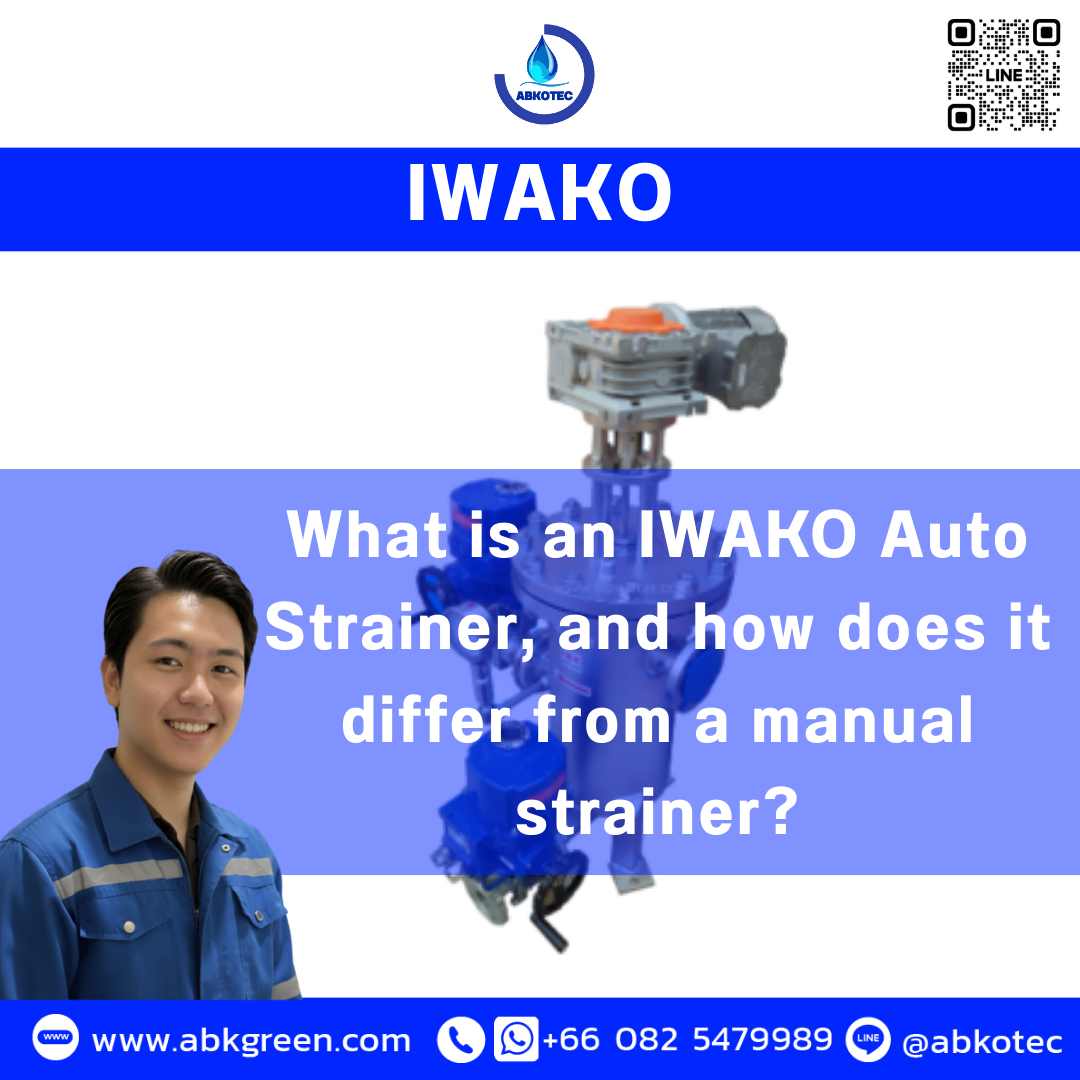
The decision between a manual strainer and an automatic one is a critical choice that impacts a plant’s uptime, labor costs, and long-term maintenance strategy.
The IWAKO Auto Strainer offers a significant upgrade over traditional methods. Understanding the fundamental differences between these two systems is the first step toward optimizing your industrial fluid management.

Understanding the Core Difference: Maintenance Method
The main distinction lies in how the filter screen is cleaned:
1. The Manual Strainer (The Traditional Method)
Manual strainers (like Basket or Y-Strainers) require direct human intervention to clean the filter element.
-
Process: When the filter clogs or the pressure drop becomes too high, the operator must stop the flow, isolate the strainer, open the housing, physically remove and clean the basket/screen, and then reassemble the unit.
-
Consequence: This results in system downtime, loss of production, and increased risk due to potential exposure to process fluids.
2. The IWAKO Auto Strainer (The Automated Solution)
The IWAKO Auto Strainer is engineered for continuous, uninterrupted operation.
-
Process: The system constantly monitors the pressure difference. When a preset threshold is reached, it automatically initiates a self-cleaning (or backwash) cycle. This process happens without stopping the main flow, and the debris is flushed out through a small drain valve.
-
Consequence: This delivers maximum uptime, minimizes human labor, and ensures reliable, continuous protection for downstream equipment.

Direct Comparison: Auto Strainer vs. Manual Strainer
| Feature | IWAKO Auto Strainer | Manual Strainer |
| Operation | Fully Automatic (Self-Cleaning) | Manual Intervention Required |
| Flow Interruption | No Interruption (Continuous Flow) | Requires Total Shutdown or Diversion |
| Downtime | Minimal to None | High (Labor time + Cooling down/Restart) |
| Labor Cost | Very Low | High (Dedicated personnel required) |
| Efficiency | Consistent filtration, optimal flow | Decreases rapidly as filter clogs |
| Long-Term Value | High ROI through labor and downtime savings | Low, due to recurring labor and maintenance costs |

The Key Advantages of Choosing IWAKO Automation
The shift from manual to an IWAKO Auto Strainer is a direct investment in plant efficiency:
-
Maximizing Uptime: Your system runs 24/7 without the need for operational pauses caused by clogged filters.
-
Reduced Labor Costs: Automated cleaning frees up technicians to focus on higher-value tasks, significantly lowering overhead.
-
Superior Equipment Protection: Consistent cleaning ensures reliable filtration, preventing abrasive particles from ever reaching and damaging costly pumps, valves, and heat exchangers.

Conclusion
While manual strainers are suitable for simple, non-critical applications, the IWAKO Auto Strainer is the necessary choice for complex, high-volume industrial systems. It transforms filtration from a maintenance burden into a seamless, automatic process.
Ready to eliminate downtime and optimize your operational efficiency? Contact our experts today to determine the perfect IWAKO Auto Strainer for your industrial needs.
ABKOTEC
TEL. 66 82 547 9989
Email : sales1abkotec@gmail.com , saleabkotec@gmail.com
Whatsapp : 66 82 547 9989
Line ID. : @abkotec
www.strainer-filter.com ,www.abkotec.com
Facebook.com/Strainer Filter Industrial